Co-Convenors’ Message

2026 has flown by for AVERT since our last newsletter! The year has been filled with a range of plans and developments for 2026 and beyond, many of which are detailed below.
They include our leadership transition beginning in 2027; introductions of new AVERT staff and executive members; the week-long series of events marking the 25th anniversary of 9/11 in September; AVERT’s submissions to a) the definition of terrorism review by the Independent National Security Legislation Monitor, (b) the New South Wales Legislative Assembly inquiry into right-wing extremism, and (c) the Royal Commission on Antisemitism and Social Cohesion, set up in the wake of the Bondi terror attack in Sydney in 2025.
And of course, we are now well into planning for our annual research symposium in November 2026, which this year focuses on youth and extremism – you can find out more about the Symposium here, including details on our conference keynote speaker, Canada’s incomparable Dr Ghayda Hassan, who will be joining us in person for the event.
You can read more about all these activities, as well as catching up with news about our 2026 webinars so far, alongside AVERT members’ successes and achievements in publications, grants and other highlights.
As you scroll through some of the links we’ve given to various pages on the AVERT website, you will also see we have a new-look website that’s been refreshed by our wonderful Technical Coordinator, Dr Callum Jones (introduced below), working alongside our tireless AVERT Coordinator, Isel Ras. We welcome your feedback and suggestions for the website as we continue to develop the site!
Finally, for the next two years of AVERT’s national activity funding (2026-2028), we are also very excited to be establishing a new AVERT Practitioner Reference Group that will offer perspectives and ideas from those working in practice- and policy-based contexts across counterterrorism and CVE spaces. Representatives from various government departments and agencies will bring deep practitioner and policy-based knowledge and expertise to AVERT, allowing us to pursue deeper and broader academic-practitioner engagement over the next couple of years.
We hope that 2026 has been as thriving and productive for you as it has been for us, and we look forward to your engagement and involvement with AVERT, as always!
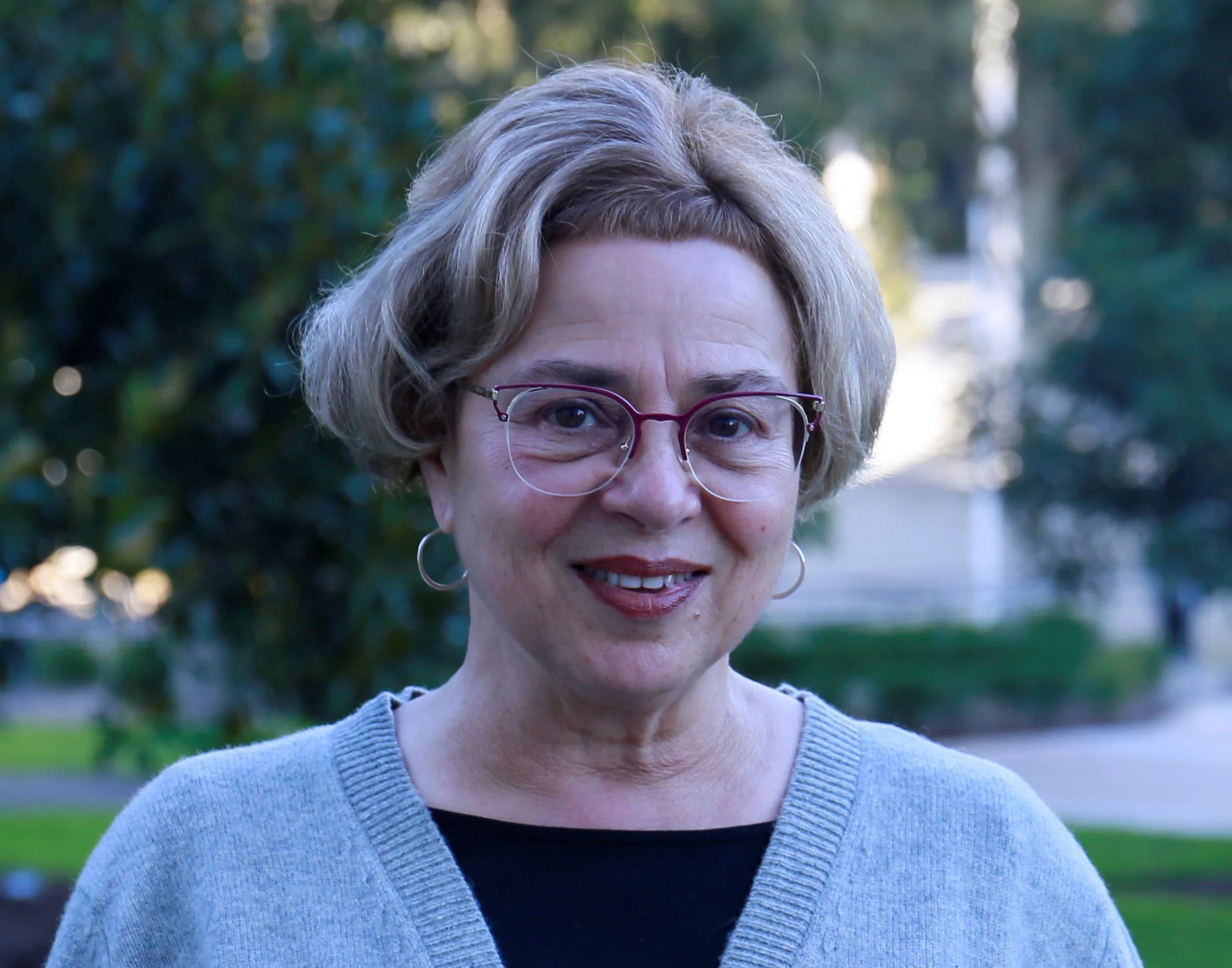
Professors Michele Grossman AM and Julian Droogan
AVERT Co-Convenors
Introducing Callum Jones, AVERT Technical Coordinator

Callum D. Jones is a Research Associate in Criminology at Deakin University and AVERT's Technical Coordinator. His research focuses on political extremism, primarily the far right, and extends to other ideological groups, including religious extremists and members of the Manosphere, as well as organised crime. Callum also serves as an Associate Editor of Terrorism and Political Violence, one of the leading journals in terrorism and extremism research. Callum is the recipient of an Office of National Intelligence National Intelligence Postdoctoral Grant (NIPG), and his project focuses on developing approaches for the automated classification of extremist content.
Callum is looking forward to redeveloping AVERT's online presence, from a new website that better reflects the breadth and quality of the network's research, to a relaunched social media strategy that makes it easier for researchers, practitioners and the public to find and engage with AVERT's work. Over the coming months, he will be focused on finalising the new AVERT website, growing AVERT's LinkedIn presence through increased posting, and supporting the promotion of upcoming webinars and symposiums, including the National Research Symposium in November.
Introducing Dr Andrew Zammit, Executive Committee member
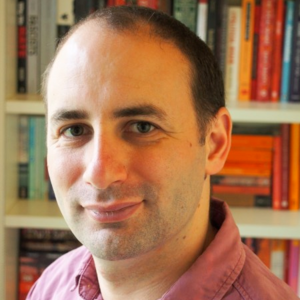
We are delighted to welcome Dr Andrew Zammit as the newest member of our Executive Committee. Andrew Zammit is a Postdoctoral Research Fellow at Victoria University and his research career in political science, including both public-facing research and applied research with government partners, has focused on terrorism and violent extremism in Australia along with other areas of public policy and national security. He was recently appointed as an Associate Editor of the Journal of Policing, Intelligence and Counter Terrorism and is a member of the Victorian Government's Expert Advisory Committee on Countering Violent Extremism. Before his current position at Victoria University, Andrew was employed as a researcher at Monash University's Global Terrorism Research Centre and as an editor for the website Australian Policy Online (APO) at Swinburne University.
Andrew's recent publications include an article on the Bondi terrorist attack (co-authored with Levi J. West), which featured as the cover story for the March 2026 issue of West Point's Combating Terrorism Center Sentinel, and a review article on the US Federal Bureau of Investigation's CVE handbook. He is currently focused on the project “How events abroad shape threats at home: grounded approaches for forecasting violent extremism”, supported by a National Intelligence Postdoctoral Grant.
Andrew's expertise on terrorism and violent extremism in Australia, experience working with government partners, and wide-ranging research interests, will bring great value to the Committee and we look forward to working with him. He hopes to use his political science background bring a strengthened focus on understanding terrorism as part of the transnational mobilisation of political violence, and how highly contingent contextual factors (the outbreak of a new war, a change of government, a strategic decision by the leaders of an armed movement or a state, or the adoption of a new technology) can have unexpected and outsized impacts on the threat environment.
AVERT Submissions to the Independent National Security Legislation Monitor’s Review of the Definition of Terrorism, the NSW Legislative Assembly’s Inquiry into Right-Wing Extremism, and the Royal Commission on Antisemitism and Social Cohesion
Members of AVERT’s Executive Committee have made submissions to three key public inquiries. First, in October last year, AVERT members made a submission to the Independent National Security Legislation Monitor’s inquiry into Australia’s legal definition of terrorism. This inquiry examines whether Australia’s definition of a ‘terrorist act’ is still fit for purpose given evolving threats and increasing lone-actor attacks. In March, Professor Michele Grossman AM, Professor Julian Droogan, and Associate Professor Keiran Hardy gave invited evidence in the public hearings for this inquiry. The inquiry is due to report by October.
In February, AVERT members made a submission to the NSW Legislative Assembly Law and Safety Committee’s inquiry into right-wing extremism, followed by oral evidence to the inquiry on behalf of the Network. In this submission, AVERT members made the case, among other things, for prevention and early intervention to be a key pillar of the state’s response to growing threats.
In June, members of AVERT’s executive committee made a written submission to the Royal Commission on Antisemitism and Social Cohesion, which was created in response to the Bondi attacks. This submission supplements invited expert reports, highlighted below, being produced by some AVERT members to assist the Commission on matters relating to extremism and radicalisation.
AVERT Leadership: Update

The AVERT Research Network is pleased to announce that Associate Professor Keiran Hardy from the Griffith Criminology Institute within the School of Criminology and Criminal Justice at Griffith University will be appointed as the new Convenor of the Network. He will commence the role in January 2027.
Keiran is a recognised expert in counter-terrorism law and countering violent extremism, with current research focusing on hate speech laws, conspiracy theories and sovereign citizens. He is Chief Investigator on an ARC Discovery Project examining conspiracy-fuelled extremism and will soon commence a National Intelligence Discovery Grant funded by the Office of National Intelligence. Both these projects involve close collaboration with the Queensland Police Service, including the study of body-worn camera footage to determine how police officers can best de-escalate violent interactions with sovereign citizens. His experience collaborating with law enforcement and working with sensitive data reflects AVERT’s commitment to evidence-based research and close industry partnerships.
Keiran has significant experience writing submissions and giving evidence to major public inquiries. He has been heavily involved in the Independent National Security Legislation Monitor’s inquiry into Australia’s legal definition of terrorism, and recently coordinated submissions by AVERT to that inquiry and the Royal Commission on Antisemitism and Social Cohesion. He also has significant experience communicating with the wider public through media and platforms like The Conversation. These experiences will help drive new ways for AVERT to share the significant findings of its members for maximum visibility and impact.
In his university roles, Keiran was HDR Convenor for a 50+ cohort of criminology PhD students. He was then appointed as HDR Advocate, where he now provides independent, confidential support to PhD students in need. As Convenor of the AVERT Network, Keiran aims to provide new opportunities for PhD students researching violent extremism and to recognise the fantastic work being done by this next generation of researchers.
Speaking of his appointment as Convenor of the AVERT Research Network, Keiran said,
“I’m excited and immensely grateful to be appointed as Convenor of AVERT, especially at a time when diverse threats of terrorism and extremism are more challenging than ever. The Network is an amazing collection of global researchers at the forefront of research on these evolving threats and how to prevent them. My main goals are to promote the fantastic work being done by our members, strengthen already close relationships with industry, and help foster the next generation by giving a platform for PhD researchers across the country and beyond.”
The outgoing Co-Convenors of AVERT, Professors Michele Grossman AM and Julian Droogan, said,
‘We are absolutely thrilled to have someone of Keiran’s calibre taking AVERT to new heights as an Australian-based, globally engaged research network devoted to producing and actioning evidence-based research and insights on a wide range of issues in counterterrorism and countering violent extremism.
Keiran brings significant experience as a highly respected and influential research leader, alongside a strong track record in developing long-term partnerships with academic colleagues and government practitioners and policymakers – both in Australia and overseas – in the counterterrorism and countering violent extremism space. We can’t wait to see how these strengths are applied in the next phase of AVERT’s continued growth as a strong and vibrant research network.’
Keiran’s appointment as Convenor will start a new exciting new chapter for AVERT, and we encourage AVERT members to join us in welcoming him to this new role. To learn more about Keiran and his research, please visit his profile on the AVERT website.
Upcoming Event: Legacies of 9/11: 25 Years of Changing Global Security
To mark the 25th anniversary of the 9/11 terrorist attacks, the AVERT Research Network will host a week-long series of virtual and hybrid events from 7–11 September 2026. Bringing together leading researchers, policymakers, practitioners, civil society representatives, and emerging scholars, the series will reflect on how the global terrorism and violent extremism landscape has evolved over the past 25 years and explore the priorities that should shape the next decade.
Rather than simply commemorating the anniversary, the events will provide a forum for evidence-based discussion on the lessons learned from counter-terrorism and prevention efforts, emerging threats, and the future of policy and practice. Each day will focus on a different theme, with the flagship hybrid event taking place on Friday, 11 September, the anniversary itself.
AVERT is delighted to partner with the Australian National University (ANU), the Institute for Strategic Dialogue (ISD), Moonshot, and Macquarie University to deliver this important series.
Further details, including the programme and registration links, will be available soon. We encourage you to keep an eye on the AVERT website and LinkedIn page for updates.
AVERT National Research Symposium 2026: Youth and Extremism
AVERT is pleased to announce its 2026 National Research Symposium, Youth and Extremism: Thresholds, Interventions, Connections, to be held on 26–27 November 2026 at Macquarie University's City Campus, Sydney.

This in-person event will bring together researchers, practitioners, analysts and policymakers from across Australia for a nationally focused deep dive into issues of strategic priority for the CVE and CT communities, with a particular focus on youth radicalisation, online influences, and the growing involvement of young people in extremist narratives and violence.

We are delighted to announce Dr Ghayda Hassan (Professor of Clinical Psychology, Université du Québec à Montréal; Director and Founder, CPN-PREV) as keynote speaker. Dr Hassan is a leading clinical psychologist and researcher whose work spans radicalisation, family violence, and the mental health of children and adolescents from ethnic and religious minorities.
The Call for Proposals is now open, welcoming submissions from both Australian and international researchers, practitioners and policymakers. We invite proposals for individual papers, themed panels, roundtables and interactive workshops addressing radicalisation pathways, risk assessment, online and family influences, gendered dimensions of extremism, practitioner perspectives, and other relevant themes.
Proposals close Monday, 17 August 2026 (11:59pm AEST), with presenters notified in the first week of September and registrations opening Monday, 7 September 2026.
Full details and the proposal submission form are available on the AVERT website: https://avert.net.au/events/symposiums/2026/.
New AVERT Research Members
AVERT warmly welcomes the following new members of the Network:
Associate Professor Maria O’Sullivan
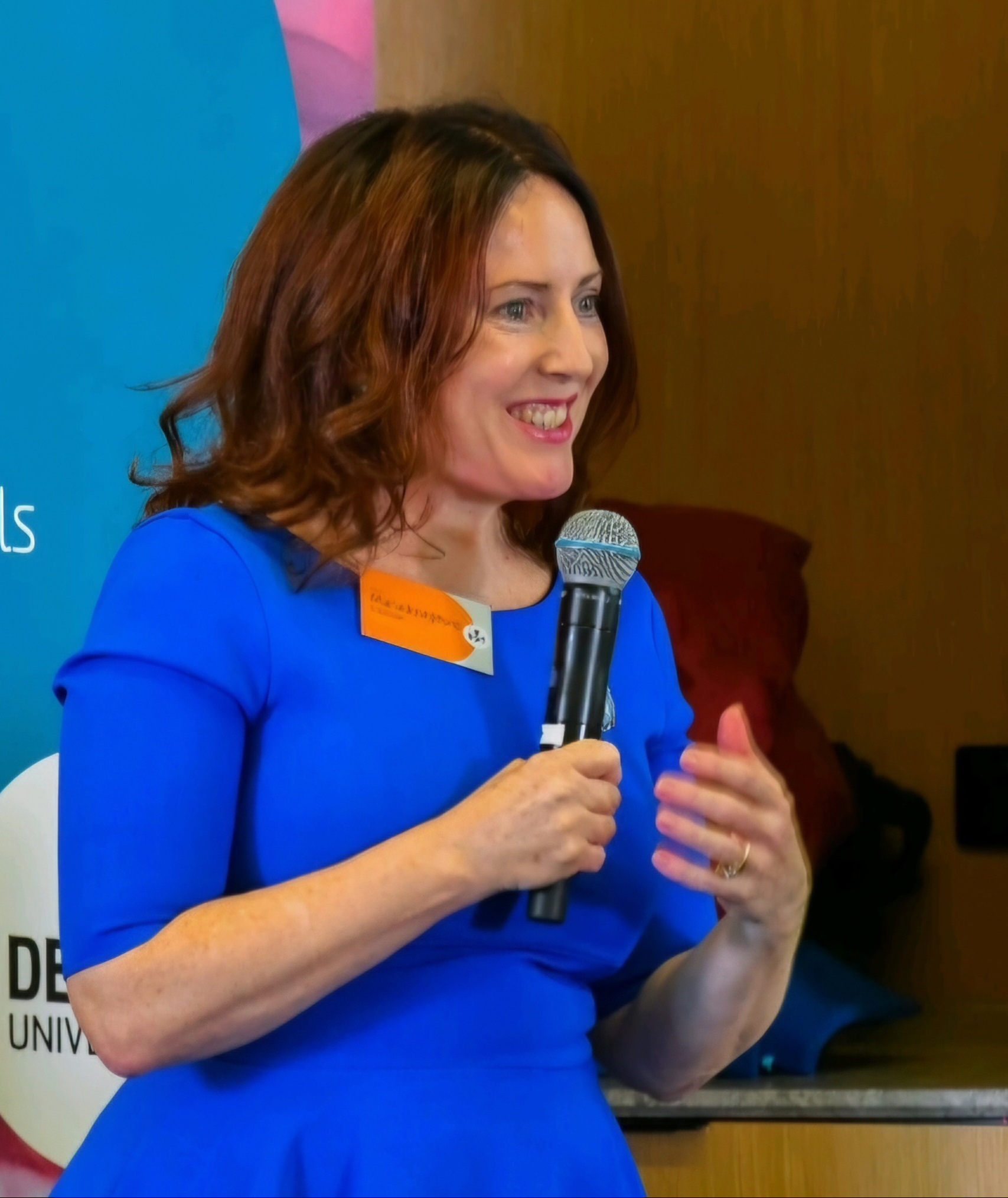
Maria O’Sullivan is an Associate Professor at the Deakin University Law School and has written on a broad range of human rights issues relating to counter-extremism and terrorism law. Her work has included scholarly papers on pseudolaw and sovereign citizens, the human rights implications of national security and the use of political violence. She is currently undertaking a three-year research project on the right to protest and has made a number of submissions to government inquiries on hate speech and counter-extremism measures. She is a regular media commentator on a broad range of rights issues and her commentary can be viewed at The Conversation.
Dr Kye Allen

Dr Kye Allen holds a DPhil in International Relations from the University of Oxford and is currently a research associate at pattrn.ai (Pattrn Analytics & Intelligence), where he focuses on AI safety. His primary research interests centre on far-right extremism, both historical and contemporary, and the intersection between technology, political violence, and extremism. Dr Allen’s research has been published by leading peer-reviewed journals—including Global Studies Quarterly, Review of International Studies, and Millennium—and he is a regular contributor to the Global Network on Extremism and Technology.
Associate Professor Anthony Ware

Anthony Ware is Associate Professor of Humanitarianism and Development at Deakin University. His research is problem-oriented and impact-focussed. His expertise is around conflict-affected humanitarian-development situations, including analysis of both the conflict and the theory and practice of international responses. He is particularly interested in everyday peace and bottom-up, civil society or community-led peacebuilding/conflict transformation, preventing violent extremism (PVE), conflict analysis, and conflict-sensitivity and do no harm (DNH). Geographically, his fieldwork primarily focussed on Myanmar until recently, particularly Rakhine State and the Rohingya conflict—but more recently he has conducted detailed fieldwork in Bangladesh, Philippines, Indonesia, Kenya and Mozambique.
Associate Professor Corinne A. Seals

Associate Professor Corinne Seals is an academic researcher and forensic linguist at Victoria University of Wellington, who is interested in what close analysis of language can reveal. Her work looks at language in social and legal contexts, including how people communicate identity, meaning, and authorship. In forensic linguistics, she applies scientific linguistic methods to questions that arise in legal and investigative settings, such as speaker identification, interpreting language evidence, and analysing targeted communication. Her wider research spans sociolinguistics, multilingualism, and applied linguistics. As Associate Dean (Research), she also works to support research activity and collaboration. Her career has focused on connecting language research with practical questions in society.
Assistant Professor Katherine Reid

Dr. Katherine Reid is an Assistant Professor of Intelligence and Security Studies in the Department of Criminal Justice and Security Studies at the University of Texas at El Paso. Her recent work focuses on weapons inscription as an emerging phenomenon in contemporary terrorism, documenting how perpetrators embed propaganda directly onto firearms. Her work has appeared in the Journal for Deradicalization, Journal of Gender Studies, and Deviant Behavior. Dr. Reid has presented her research internationally and has delivered briefings to law enforcement agencies.
AVERT Webinar/Seminar Series
Between May and August 2026, AVERT hosted the following webinars:

From the Fringe to the Centre: The Differing Radicalisation Strategies of Groups
Dr J. M. Berger, Middlebury Institute of International Studies
This webinar explored how the radicalisation strategies of extremist movements differ when operating from the political fringe compared with when they attain positions of power, with implications for understanding extremist movements and strengthening efforts to prevent their political success.

The Filtering Role of Trust in the Process of Disengagement
Dr John Morrison, Maynooth University
Dr Morrison examined the role of trust in disengagement from violent extremism, using the Phoenix model of disengagement and deradicalisation, which incorporates (dis)trust as a filter variable. The presentation considered how this can inform CVE approaches, including cross-cultural differences in the development and maintenance of trust.

De/Transition, Disinformation, and Digital Moral Panic
Kat Fuller, University of Nevada, Las Vegas
Drawing on a qualitative content analysis of digital news coverage of detrans figure Chloe Cole between 2023 and 2024, this presentation examined how trauma narratives, disinformation about medical transition, and framing of trans people as threats have been mobilised by anti-LGBTQ+ networks to advance far-right agendas and facilitate radicalisation into political extremism.

Introducing the Nihilistic Violent Extremism (NVE) Database
Dr Bettina Rottweiler, National Counterterrorism Innovation, Technology, and Education Center (NCITE)
This webinar introduced a new international, live database of more than 80 individuals charged with, convicted of, or otherwise affiliated with nihilistic violent extremist groups such as 764, CVLT, and No Lives Matter. Drawing on systematic open-source research and US federal court records, the database identifies perpetrators, mobilisation indicators, and patterns of harm among those involved, establishing an evidence base to inform prevention, early intervention, and risk assessment.

The Sovereign Citizen Movement: Global and Local Threats
Lydia Khalil, Lowy Institute and Deakin University, and Keiran Hardy, Griffith Criminology Institute
Sovereign citizens are often dismissed as fringe conspiracy theorists, but the movement's rejection of government legitimacy and democratic rule of law has made it a growing national security concern worldwide. This webinar examined how sovereign citizen beliefs have fuelled delegitimising narratives, alternative structures of authority, and acts of political violence, and considered how law enforcement, governments, and society can best respond amid rising inequality and democratic decline.

Jihadism and the Bondi Attack: Disrupting IS and AQ Strategy in 2026
Ali Fisher, Università Cattolica del Sacro Cuore, Milan
Following the December 2025 terrorist attack in Bondi, this webinar examined how Salafi-Jihadi groups such as IS and AQ have been communicating to their target audiences since the attack, including how content is distributed online and the growing role of AI. Moving beyond a Western lens that assumes a single extremist narrative, the presentation explored the continued propaganda operations of IS, AQ, and the Taliban, and considered options for disrupting post-Bondi jihadi messaging.
Teenage Terrorism in Germany: Findings from the First National Study of Terrorgram Police Files
Dr Daniel Koehler, Joint Counterterrorism Center at the State Bureau of Investigation, Germany; Competence Center Against Extremism
Drawing on criminal investigation files, this webinar presents findings from the first national study of Germany's Terrorgram milieu, examining the socio-biographic pathways and mental health dimensions shaping radicalisation, with implications for P/CVE practice and policy.
AVERT Research Members Updates: Publications, Grants, Awards
(Between December 2025 – June 2026)
Grants
Congratulations to Professor Kristina Murphy (a member of AVERT’s Steering Committee) and Associate Professor Keiran Hardy (a member of AVERT’s Executive Committee) for being awarded a 2026 National Intelligence Discovery Grant (NIDG) via the Office of National Intelligence (ONI). This is a highly competitive scheme: only 10 grants were awarded nationally across all academic disciplines, following more than 500 expressions of interest. The $800,000 grant will fund a three-year project examining sovereign citizen extremism in Australia. Dr Sabryna Sas, who is currently working with Tina and Keiran on an ARC Discovery Project on conspiracy extremism, will be the project’s Postdoctoral Research Fellow. A funded PhD position on the project will be advertised soon. Despite increasing incidents linked to sovereign citizen extremism, there is limited empirical evidence about what drives these beliefs and the factors that contribute to violence. Through the analysis of police body-worn camera footage, a national survey, and engagement with sovereign citizen adherents, the research team will generate critical new knowledge to help police and other agencies identify, manage, and mitigate these growing threats.
Dr Callum D. Jones (AVERT’s Technical Coordinator and member of the Executive Committee) was awarded a 2026 National Intelligence Postdoctoral Grant (NIPG) from the ONI in the same funding round. Callum’s $365,000 grant will fund a two-year project that will develop a typology of anti-authority extremism that maps the beliefs an individual holds, the actions they view as necessary or justifiable, and the likelihood of enactment: a belief–action–enactment nexus. This typology will be used to fine-tune an AI model that will enable the automated classification of extremist beliefs and the flagging of possible escalations into violence.
We congratulate Tina, Keiran, and Callum on these outstanding achievements.
Awards & Recognitions
Dr Muhammad Akram
Professor Amparo Pamela Fabe
Dr Elaine Pressman
Professor Michele Grossman, Professor Julian Droogan, Associate Professor Josh Roose, Professor Adrian Cherney, Associate Professor Mario Peucker, Professor Paul Thomas (to date)
Publications
Dr Gerard Gill
Professor Lee Jarvis
Dr Jade Hutchinson
Dr Muhammad Akram
Professor Winnifred Louis
Dr Levi West
Dr Alexandra Phelan
Dr Kieren Lilly
Professor Emma Thomas
Dr Felix Pal
Professor Sara K. Thompson
Professor Joel Busher
Professor Amparo Pamela Fabe
Professor Mary Beth Altier
Dr Caitlin Clemmow
Dr Andrew Zammit
Grants & Funding
Dr Jade Hutchinson
Awarded the Charles University PRIMUS Research Grant and appointed Principal Investigator on the “Research in Societal Extremism” project, investigating how mechanisms converge within extremist communities. The project will produce new analytical models of “societal extremism” and deliver international publications, conferences, workshops, and practitioner engagement.
Professor Emma Thomas
Professor Sara K. Thompson
Dr Caitlin Clemmow
Opportunities
Call for Papers: 18th Annual International Conference of the Society for Terrorism Research (STR)
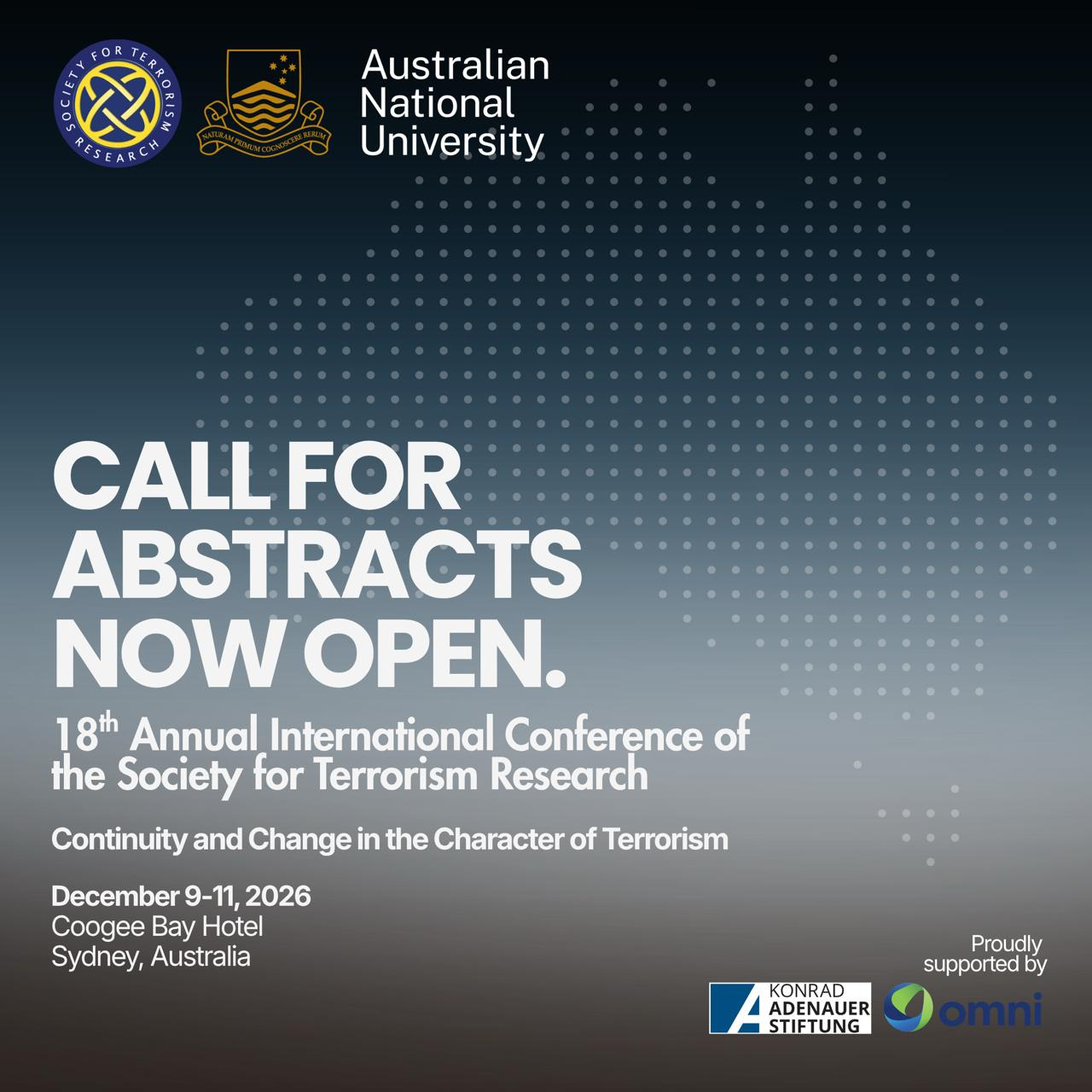
"Continuity and Change in the Character of Terrorism" — marking STR's 20th Anniversary
9–11 December 2026, Coogee Bay Hotel, Sydney
The Society for Terrorism Research, in partnership with ANU's Centre for Social Policy Research (POLIS) and supported by the Konrad Adenauer Stiftung, has opened its call for papers for the 18th Annual STR Conference. The conference invites submissions engaging with continuity and change in the profiles, motivations, actors, tactics, ideologies, organisational dynamics, geographies and strategies of terrorism, and what this means for CT and P/CVE research, policy and practice.
Submissions are welcome from both emerging and established scholars, and from practitioners and policymakers as well as researchers, with submissions from South East Asia particularly encouraged. Formats include papers, posters, panels, roundtables and book talks, across 17 tracks spanning radicalisation, psychology of terrorism, ideologies, cyber-terrorism, the crime-terror nexus, counter-terrorism and more.
Important dates:
Deadline for proposal submissions: Monday, 31 August 2026 (11:59pm)
Notification of outcomes: 9 September 2026
Important links:
Full details and abstract submission: https://indico.global/event/18285/
Enquiries: Sydney2026@SocietyforTerrorismResearch.org
Save the Date: Hedayah International Research Conference 2026 (RC26)

26–28 October 2026, Valletta, Malta
Hedayah, the International Centre of Excellence for Countering Extremism and Violent Extremism, invites you to save the date for its upcoming International Research Conference 2026 (RC26). Hosted by Hedayah in partnership with the International Institute for Justice and the Rule of Law (IIJ), RC26 will bring together policymakers, practitioners and researchers to exchange cutting-edge and actionable research on countering extremism and violent extremism, with the aim of strengthening collective approaches and fostering new partnerships.
Conference registration details will be shared in August 2026.
Enquiries: For more information, or if you are interested in supporting the conference or participating as a speaker, please contact events@hedayah.ae.